
Railway Sleepers: The Complete Buying Guide for Gardens and Landscaping
Published on 8 September 2026
Quick Answer
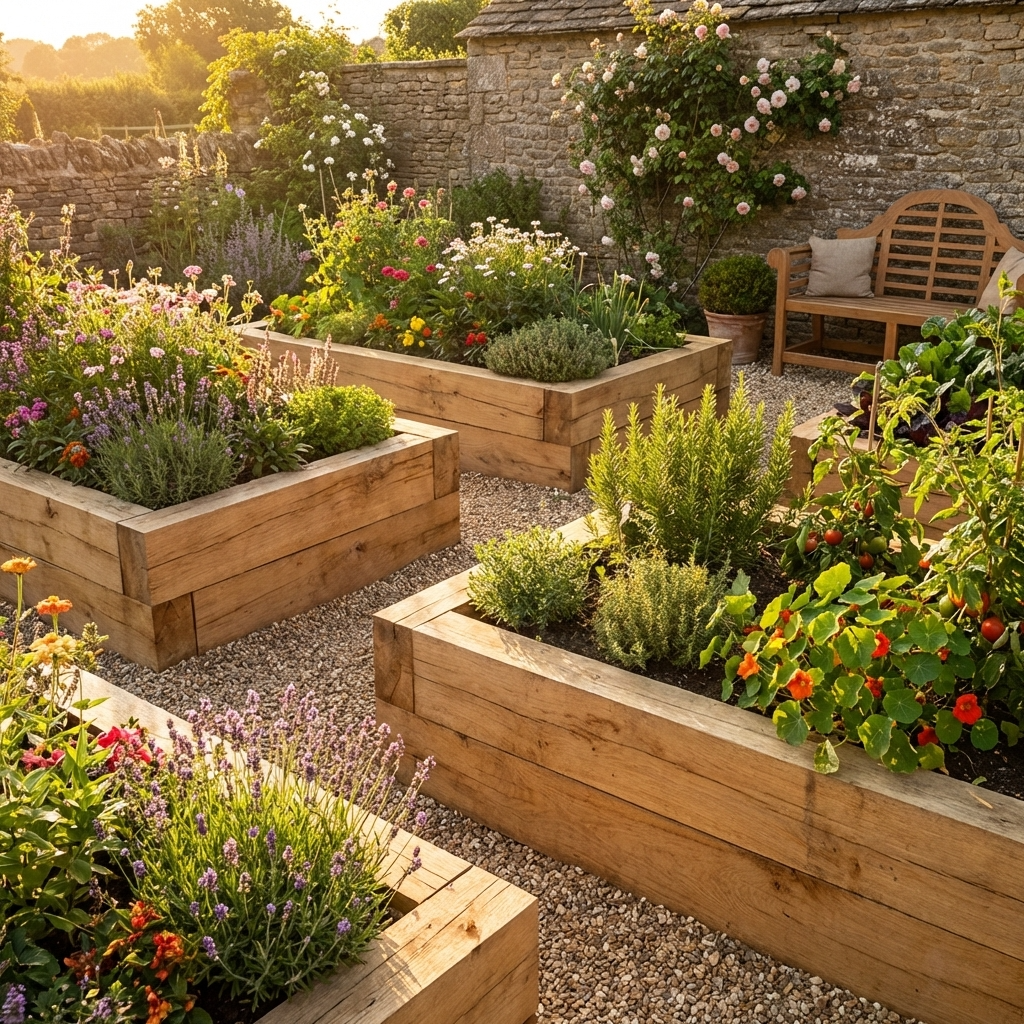
Railway sleepers are thick, rot-resistant timber beams (typically 200x100mm or 250x125mm) used to build raised beds, retaining walls, garden edging, steps and seating. For garden use, choose new softwood sleepers pressure treated with Tanalith E to UC4 – the industry standard for permanent ground contact – for the best balance of cost, longevity and safety, or oak sleepers for a premium longer lasting option that needs no chemical treatment. Reclaimed sleepers must not be installed anywhere near where children play or vegetables grow, since it’s very likely reclaimed sleepers have been treated with creosote.
Contents
- What are railway sleepers?
- Types of sleepers: New vs Reclaimed vs Oak
- How to choose the right sleeper for your project
- Treatment and longevity: Why Tanalith E Matters
- Installation basics
- Caring for your new sleepers
- Are railway sleepers sustainable?
- FAQs
What are railway sleepers?
Traditional railway sleepers were the timber beams laid beneath train tracks to hold the rails in place and spread the load of passing trains. They needed to be dense, dimensionally stable and resistant to decades of weathering, which is exactly why the became so popular for garden landscaping once they were no longer needed on the railways.
Today, the vast majority of “railway sleepers” sold for garden use are actually new sleepers, manufactured to the same dimensions, rather than reclaimed ones lifted from a track bed. This is a good thing for most projects: new sleepers are more consistent, easier to work with, free from ballast and metal fixings, and can be treated specifically for garden and landscaping use rather than a century of rail traffic.
At our yard in Silverstone, we stock both new untreated oak and pressure treated softwood sleepers, treated on site in our own Tanalith E plant, so what you’re buying has been prepared specifically for garden longevity rather than repurposed from another job.
Types of Sleepers: New vs Reclaimed Vs Oak
New softwood sleepers (pressure treated)
The most popular choice for garden projects. Typically pine or spruce, pressure treated with Tanalith E to UC4, the treatment standard specifically for timber in permanent contact with soil or fresh water. Consistent sizing, sharp edges (can be eased edge on request), and no history to worry about. These are a sensible middle ground on cost and lifespan. Purchase these here.
Oak sleepers
Naturally durable thanks to Oak’s high tannin content, which means they don’t need chemical preservative treatment to last outdoors. They weather to a beautiful silver-grey and typically outlast softwood by a significant margin. The trade-off is weight (oak is dense and heavy to move) and price, since oak costs more per cubic metre than softwood. Purchase these here.
Reclaimed sleepers
You’ll also see genuine ex-railway sleepers, with real character: weathered, oil stained, and generally full of history. Before you consider reclaimed sleepers, it’s worth knowing that they were often treated with creosote, a preservative that’s now restricted for anywhere the public might have contact, particularly where children play or where you’re growing edible crops.
How to choose the right sleeper for your project
A few practical questions will point you to the right sleeper:
What’s the sleeper going to touch?
If it’s in contact with soil, especially soil you’re growing food in, go for a new softwood treated sleeper with Tanalith E, which is approved for use around edible planting, or an untreated oak sleeper. Steer well clear of reclaimed or creosoted sleepers for these projects, regardless of where they’re sourced.
How much weight or pressure will it take?
Retaining walls holding back real soil pressure need thicker sleepers (250x125mm) and proper foundations. Edging and low borders can get away with standard 200x100mm sizing.
What look are you after?
New sleepers give crisp lines and a more contemporary finish. Oak develops a natural silver patina over a year or two.
What’s your budget?
Softwood is the most cost effective option, while oak sits at the premum end thanks to its density and longevity. If you’re not sure what option suits your project, contact us and we can tell you about sizes available and the treatment.
Treatment and longevity: Why Tanalith E matters
Untreated softwood in contact with damp soil will start to break down within a few years. Pressure treatment changes that significantly.
Tanalith E is a water-based wood preservative that’s forced deep into the timber’s cell structure under vacuum pressure, rather than just coating the surface the way a brush on or dip treatment does.
Sleepers specifically need a treatment rated for ground contact, not just general outdoor use. We treat ours to UC4 under the EN335 European use class system, the classification for timber that’s permanently in contact with soil or fresh water and faces the highest risk of fungal decay. It’s a higher specification than the UC3 rating used for above-ground timber, as other merchants sell.
We run our own Tanalith E plant at our yard, which means all of our timber is treated in-house as part of our normal process, rather than being sent off to a third party. This means we have full control over the process, knowing the quality of treatment. Oak doesn’t go through this process, since its natural density and tannin content do the job that treatment does for softwood.
Installation basics
Sleepers are heavy and forgiving in equal measure, which makes most projects very achievable as a weekend DIY job. A few fundamentals apply across most projects:
- Level your base first. A compacted hardcore or sharp sand base stops sleepers rocking or settling unevenly over time.
- Stagger joints like brickwork when stacking sleepers for a wall or raised bed, so vertical joints don’t line up between courses.
- Fix with heavy duty timber or structural screws as you go
- Line raised beds if growing vegetables in older timber using a heavy-duty liner as a precaution, and even line new sleepers to aid longevity.
- Get retaining walls checked by a landscaper or engineer once you’re holding back any meaningful slope or height, since the loads involved are easy to underestimate.
Caring for your sleepers
Treated softwood and oak both need very little ongoing maintenance, which is part of the appeal.
- Keep the base of sleepers clear of compacted soil or mulch that traps moisture against the timber
- Brush off algae or moss build up on shaded sleepers with a stiff brush and water
- A garden safe timber oil applied every couple of years will keep the colour looking fresh, although this is optional. Left untreated, both softwood and oak will weather to a silver grey over time.
- Check fixings on stacked walls or steps regularly, especially after a particularly hot or wet spell.
Are railway sleepers sustainable?
New sleepers bought from a responsible merchant, like Linnell Bros, are a very sustainable landscaping choice. All of our timber is sourced through FSC and PEFC certified supply chains, meaning it comes from forests managed for long term replanting rather than being depleted. Buying new, correctly treated sleepers also avoids the environmental question mark that hangs over old creosoted reclaimed timber, some of which requires specialist disposal rather than simply being repurposed indefinitely.
FAQs
Pressure treated softwood sleepers have a desired life of 15 years. Oak sleepers often last considerably longer thanks to their natural density and tannin content.
Yes. New sleepers treated with Tanalith E are approved for use around edible planting once the treatment has cured, and oak sleepers are untreated by nature so carry no chemical concerns at all. Older reclaimed sleepers treated with creosote must be avoided for beds growing food.
Standard garden sleepers are 200x100mm, suitable for edging, low borders and raised beds up to two or three courses. For retaining walls or anything holding back real soil pressure, 250x125mm or larger is generally recommended, alongside proper foundations.
Most garden retaining walls under one metre in height don’t require planning permission, but rules vary by council and by site, particularly near boundaries. Check with your local planning authority before starting a taller wall.
Softwood sleepers are pressure treated with preservative to resist rot, are lighter to handle, and cost less. Oak sleepers are naturally durable without treatment, heavier, more expensive, and weather to a distinctive silver grey over time.
For a single course of edging, weight alone is often enough. Above two courses, or anywhere the sleepers will take lateral pressure from soil or foot traffic, they should be fixed with heavy duty screws or threated bar to stop movement over time.
Sleepers should be treated to UC4 under the EN335 standard, the classification for timber in permanent contact with soil or fresh water. This is a higher specification than general purpose outdoor treatment (UC3), which is designed for timber that’s exposed to weather but not sitting directly in the ground.
Visit us
Our sleeper range, both new pressure treated softwood and oak, is available to order online for local delivery or you can order online and click and collect from our yard in Silverstone. Need help? Use our live chat service or call us between 7am – 5pm Monday – Friday.