
How to Choose the Right Fence Style for Your Garden
Published on 18 June 2026
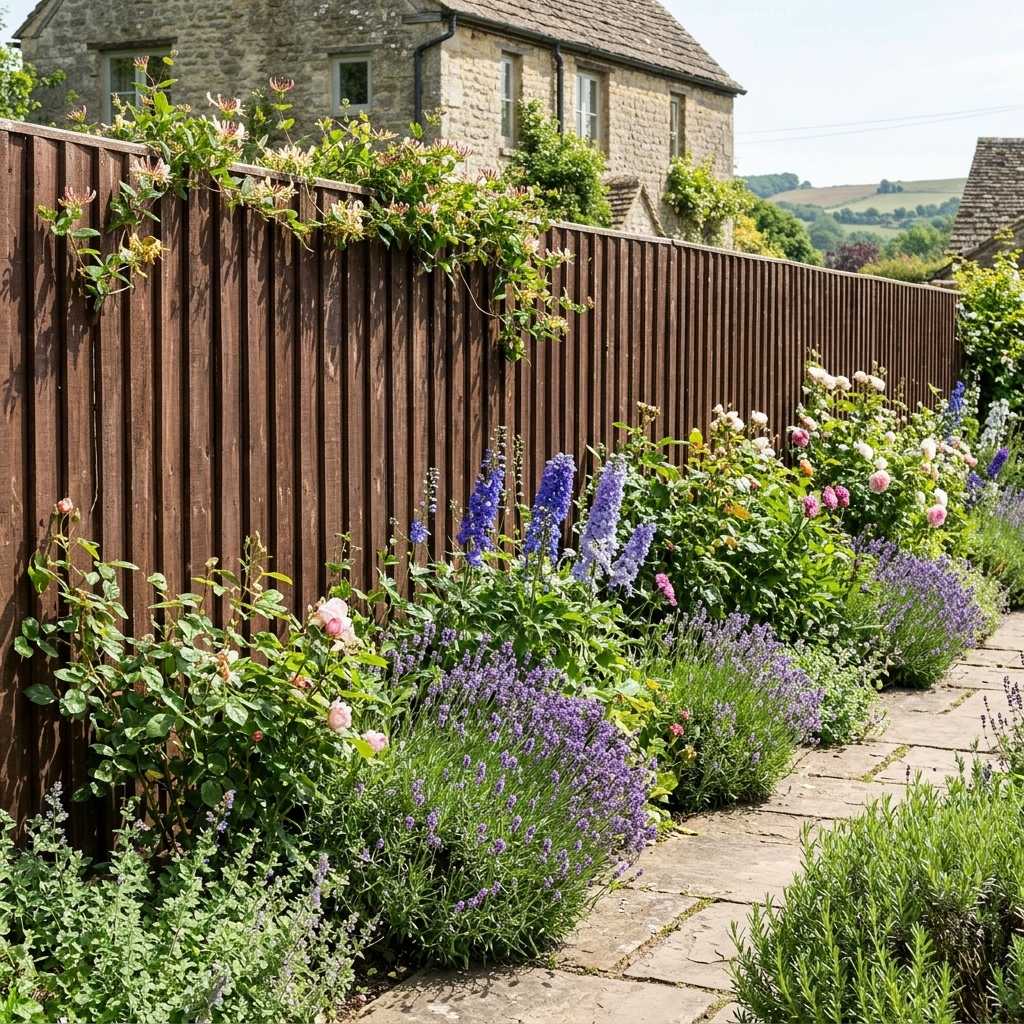
We’re often asked “what type of garden fence is best for my garden?” This is a great question considering a garden fence is one of the most significant elements of your outdoor space. It defines the boundary, ensures privacy, and provides security. But beyond its practical functions, a fence can be a powerful design tool. The right style can harmonise with your home and planting, while the wrong choice can feel jarring and out of place.
Choosing a fence should be as thoughtful a process as selecting plants or paving. Your garden has a distinct personality, be it a traditional cottage garden, a sleek modern retreat, or a wild rustic haven. Matching your fencing to that style is the key to creating a cohesive and beautiful outdoor environment.
This guide will walk you through choosing the perfect fence for your garden’s aesthetic. We will explore different styles, discuss the best materials and finishes for each, and provide expert tips to help you make a decision that you will be happy with for years to come.
Defining Your Garden Style
Before you explore fencing options, take a moment to consider your garden’s character. Is it formal or informal? Structured or naturalistic? Your answers will point you toward the right materials and designs.
- Traditional/Cottage: Characterised by abundant flowering plants, classic brickwork, and a slightly informal, romantic feel.
- Modern/Minimalist: Focuses on clean lines, simple geometry, limited colour palettes, and the interaction between hardscaping and architectural plants.
- Rustic/Naturalistic: Embraces nature with wild planting, curved lines, and materials that look like they belong in the landscape.
Once you have identified your style, you can find a fence to match.
Fencing for the Traditional or Cottage Garden
A traditional garden calls for fencing that is classic, elegant, and timeless. The goal is to create a sense of established charm that complements lush planting and classic architecture.
Recommended Style: Closeboard or Featheredge Fencing
At Linnell Bros, we believe that a closeboard fence, built from a kit, is the quintessential choice for a traditional garden. Its continuous run of overlapping vertical boards creates a solid, handsome backdrop that allows colourful flowerbeds to stand out. You can also choose to use ready-made closeboard panels.
- Why it Works: The solid construction offers excellent privacy and a sense of security, which is ideal for classic garden layouts. The texture of the timber adds a natural softness that painted walls lack.
Materials and Finishes
- Brown-Treated Timber: This is great choice for a traditional aesthetic. The warm, rich brown tone provides an instant sense of establishment and pairs beautifully with red brick and natural stone.
- Decorative Touches: A capping rail is almost essential for this style. It adds a crisp, finishing line to the top of the fence, giving it a professional, “framed” look. For extra charm, consider adding a decorative trellis topper to support classic climbing plants like roses or clematis.
Fencing for the Modern or Minimalist Garden
Modern gardens are all about structure, clean lines, and a “less is more” philosophy. The fencing should be understated, sleek, and serve as a bold architectural element.
Recommended Style: Slatted Screen Fencing
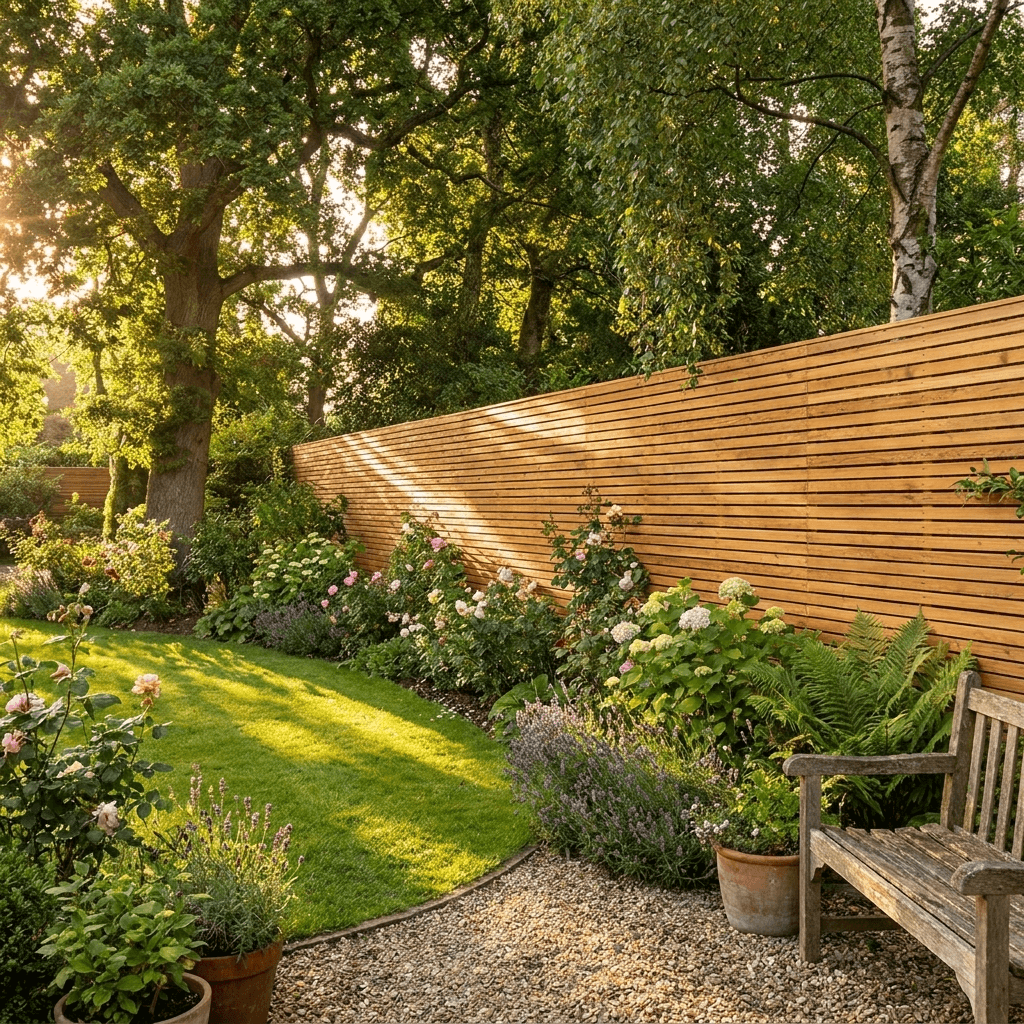
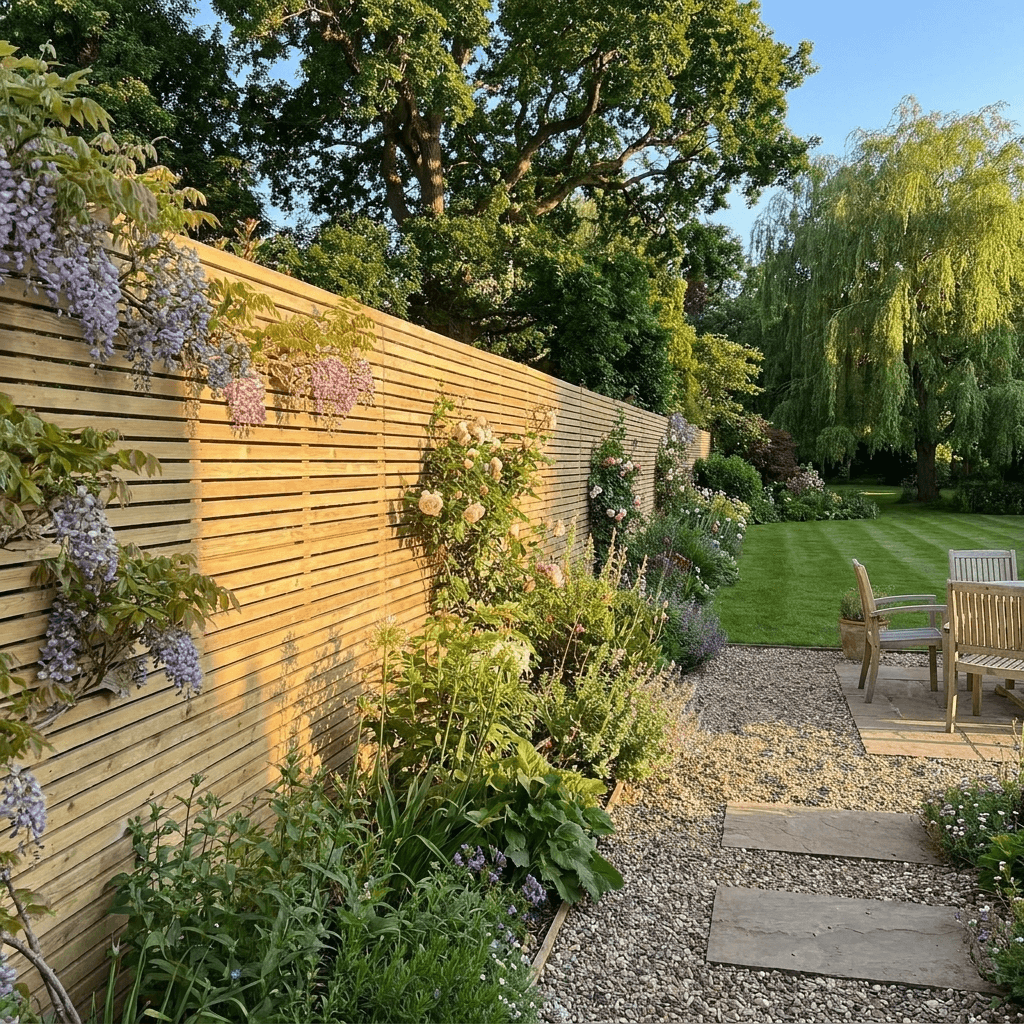
Horizontal slatted screens are the hallmark of modern garden design, supplied as a kit or pre-made panels. The strong horizontal lines draw the eye and can make a space feel wider and more dynamic.
- Why it Works: The gaps between the slats allow light and air to pass through, creating beautiful shadow patterns while still providing a good level of privacy. This avoids the heavy, “boxed-in” feeling that a solid fence can create in a minimalist design.
Materials and Finishes
- Green-Treated Timber: The subtle green hue of new timber weathers over time to a stunning silver-grey. This cool, neutral tone is the perfect complement to modern materials like concrete, steel, and slate.
- Precision is Key: For this style, consistency is everything. Ensure the gaps between your slats are perfectly uniform to maintain the clean, geometric look. Avoid decorative elements like capping rails; the beauty of this style lies in its simplicity.
Fencing for the Rustic or Naturalistic Garden
A rustic garden aims to blend seamlessly with the surrounding landscape. The fencing should feel organic, informal, and as if it has always been there.
Recommended Style: Post and Rail Fencing
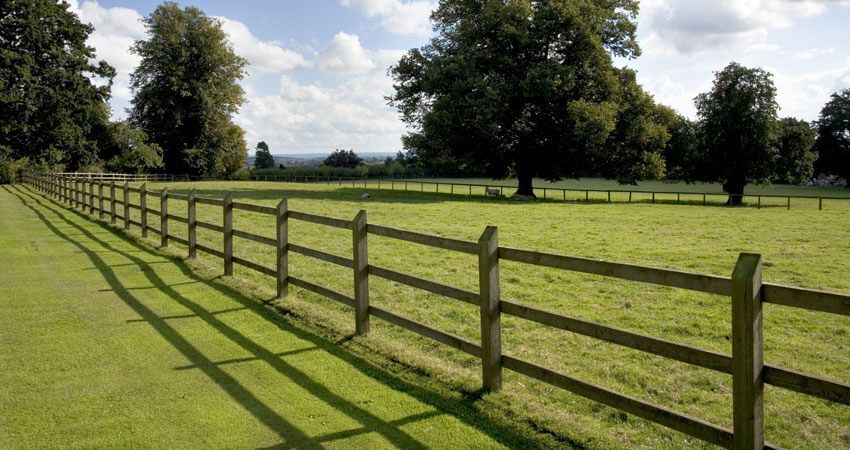
Simple post and rail fencing is the classic choice for a rustic look, often seen in rural and agricultural settings. It defines a boundary without creating a solid visual barrier, keeping the garden feeling open and connected to its surroundings.
- Why it Works: Its open design is perfect for properties with a view or for marking boundaries within a larger garden. It has an honest simplicity that complements wildflower meadows, mature trees, and informal planting. For a little extra security, you can attach stock netting or wire mesh to the inside to help keep pets in.
Materials and Finishes
- UC4-Treated Timber: For this style, durability and a natural appearance are paramount. Using robust, UC4-treated timber for both the posts and rails ensures they will last for decades, even in direct contact with the ground.
- Natural Weathering: Allow the pressure-treated timber to age naturally. It will slowly transition from its initial treated colour to a soft silver that melts into the landscape.
Conclusion
Your garden fence is more than just a line on a map; it’s the frame for your outdoor masterpiece. By taking the time to match your fencing to your garden’s unique style, you create a harmonious and visually pleasing space.
Here is a simple summary to guide your choice:
- For Traditional Gardens: Choose brown-treated closeboard fencing with a capping rail for a classic, elegant look.
- For Modern Gardens: Opt for green-treated slatted screens that will weather to silver, emphasizing clean lines and architectural form.
- For Rustic Gardens: Use simple, durable post and rail fencing that ages naturally and keeps the space feeling open.
By investing in the right style and high-quality, pressure-treated materials, you can install a fence that not only meets your practical needs but also elevates the beauty of your entire garden.
Yes, you can, but it should be done with a clear purpose. For example, you might use a solid closeboard fence along a boundary with a neighbour for privacy, but use more open post and rail fencing at the back of the garden to preserve a view. The key is to ensure the transition feels intentional.
Closeboard (featheredge) fencing is the most versatile option. It acts as a neutral and solid backdrop that works well with almost any planting scheme. You can easily adapt it by adding a capping rail for a traditional feel or leaving it plain for a more modern look.
A tall, solid closeboard fence is the best option for security and privacy. A height of 1.8 meters (6 feet) is standard. Ensure it is topped with a capping rail to make it more difficult to climb and install a sturdy, lockable gate.
Colour has a huge impact. Brown-treated timber adds warmth and makes a fence a more prominent feature, while green-treated timber (which weathers to silver) helps the fence blend into the background, allowing your plants to be the stars of the show.
Absolutely. Timber from Linnell Bros is certified by the FSC® or PEFC, ensuring it comes from sustainably managed forests. Furthermore, using long-lasting, pressure-treated timber reduces the need for frequent replacements, which is better for the environment in the long run.