
How to Choose Acoustic Fencing: Performance Ratings, Materials & What Actually Works
Published on 27 February 2026
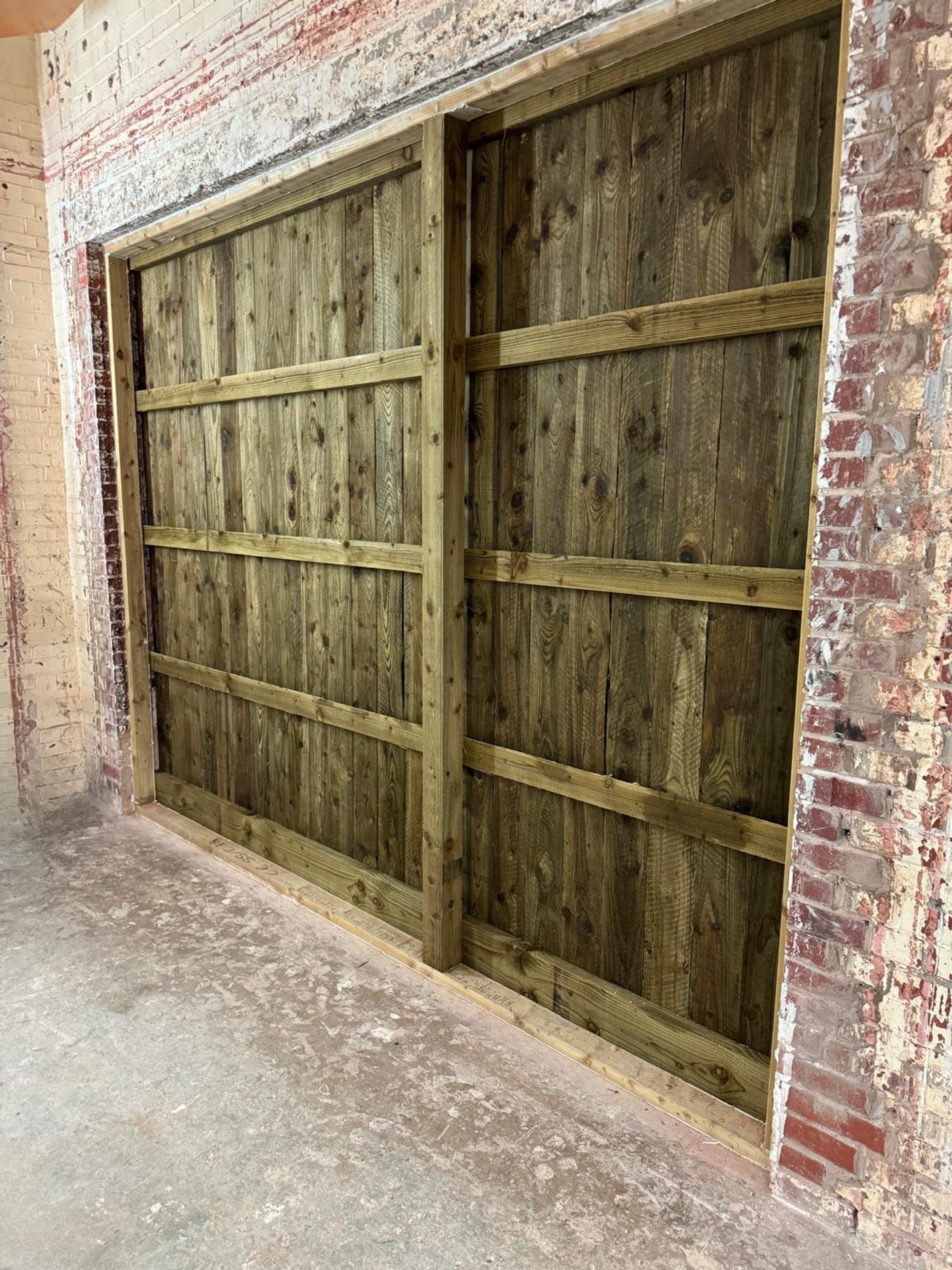
If you live near a busy road, railway line, school, pub or light industrial site, unwanted noise can quickly affect your comfort, privacy and property value. The right acoustic fencing system can make a significant difference, but not all acoustic fence panels perform the same.
This buyer’s guide explains:
- What acoustic fencing rating dB figures actually mean
- Why performance depends on the whole system, not just the panel
- Which materials and specifications matter most
- How to compare products using recognised standards
- What to look for before requesting a quote
If you’re researching noise reduction fencing for a home, housing development, school or commercial site, this guide will help you choose confidently.
What Is Acoustic Fencing — And Does It Really Work?
Acoustic fencing is designed to reduce the transmission of sound from one area to another. It does not eliminate noise; no outdoor barrier can “silence” the environment, but it can significantly reduce perceived noise levels when properly specified and installed.
Common UK applications include:
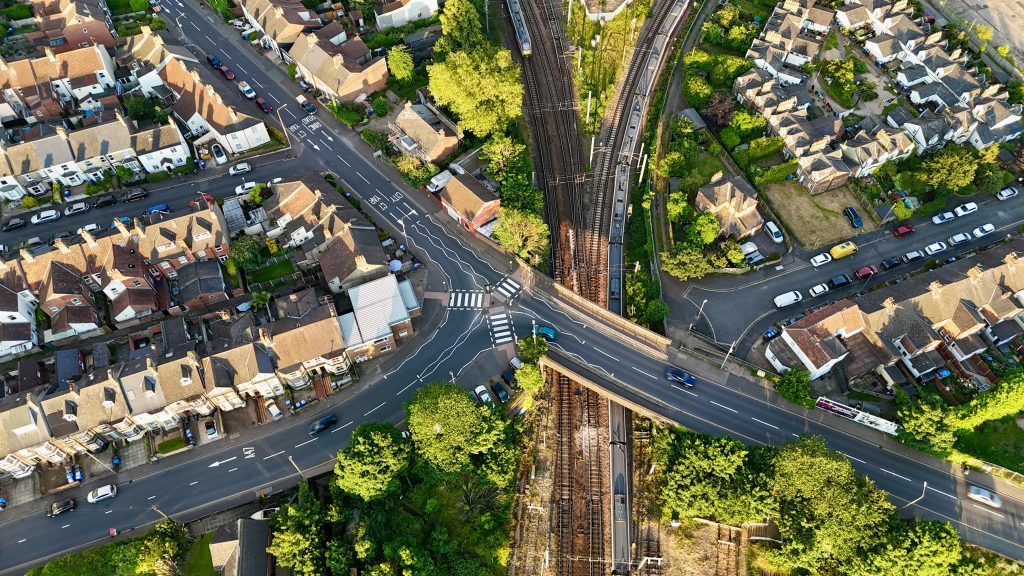
- Fencing to reduce road noise
- Acoustic fence for railway noise
- Housing developments near transport routes
- Schools and healthcare facilities
- Industrial and commercial premises
High-performance systems such as Linnell Bros acoustic fencing are engineered to deliver noise reduction of up to 26 dB when installed correctly and used in appropriate site conditions.
Unlike standard garden fencing designed primarily for privacy and security, acoustic fence panels are purpose-built with specific mass, density, and construction characteristics that actively block and absorb sound waves.
Crucially, Linnell systems are:
- Manufactured and tested in line with BS EN 1793 acoustic barrier fencing
- Tested to BS EN ISO 10140-2:2021
- Independently tested at the University of Salford Acoustic Test Laboratory
- UKAS accredited Test Laboratory No. 1262.
That means you’re comparing against measured performance, not marketing claims.
Understanding Acoustic Fence Performance Ratings (dB, Standards and Real-World Factors)continuous barriers that minimise sound leakage across critical frequency ranges.
How Many dB Does Acoustic Fencing Reduce?
Performance is typically expressed in decibels (dB). When you see “up to 26 dB”, this refers to the maximum reduction achieved under controlled testing conditions.
In practical terms:
- A 10 dB reduction is generally perceived as roughly halving the loudness
- A 20–26 dB reduction can create a noticeable improvement in comfort
- However, real-world results depend on several critical factors.
You may also see performance described as Design Level Difference (DLR), which is the measured reduction in sound level between the noise source side and the receiver side under test conditions.
Our systems deliver 28.3dB for Noise Reflect and 28.9dB for Noise Reflect Grooved, meaning they can reduce perceived noise by more than half.
Why “Up to 28.9dB” Depends on the Whole System
The system drives performance, not just the panel. Sound reduction relies on:
- Mass (heavier, denser materials block more sound)
- Airtightness (no gaps or air paths)
- Correct installation
- Continuous barrier coverage
- Height relative to the noise source and receiver
- Ground conditions and reflections
- Properly sealed gates and returns
Even small gaps at the base or between panels can undermine results. Sound will always find the weakest path.
Example of what “mass” looks like in a tested system:
Noise Reflect has a superficial mass density of 25.6 kg/m², and Noise Reflect Grooved has 22.5 kg/m². Higher superficial mass density helps reduce sound transmission through the panel, but performance still depends on airtight installation and barrier continuity.
Acoustic Fence Comparison Checklist
Before buying, ask:
- Is there a clearly stated dB rating?
- Is the performance tested or just estimated?
- Which standards were used?
- Was it tested as a complete system or only as a material?
- Was testing carried out by an independent laboratory?
Linnell Bros acoustic fencing is:
- Manufactured and tested in line with BS EN 1793 and BS EN ISO 10140-2:2021 at the University of Salford Acoustic Test Laboratory.
- This gives specifiers, developers and homeowners confidence in measurable performance.
- Best Materials for Acoustic Fencing (Timber, Composite, Concrete)
Not all materials reduce noise in the same way. The key principle remains the same: mass + airtightness + correct installation.
| Material Type | How It Reduces Noise | Pros | Cons | Best Use Cases | Maintenance/Durability |
| Timber Acoustic Fencing | Mass and sealed joints block sound transmission | Attractive, natural appearance; easier installation; versatile | Performance depends on thickness & airtightness | Residential, housing developments, schools | 10–15 years typical lifespan when UC4 treated |
| Concrete/Masonry | High mass reflects and blocks sound | Very effective; durable | Heavy groundwork; visually intrusive | High-traffic roads, commercial sites | Long lifespan; minimal maintenance |
| Composite/Acoustic Panels | Often combine dense core + absorption | High performance; engineered | Higher cost | Commercial/industrial | Varies by manufacturer |
Why Timber Remains Popular in the UK
Timber acoustic fencing is widely specified because it balances:
- Performance
- Cost
- Aesthetics
- Installation speed
Linnell Bros systems are built from sustainably sourced, pressure-treated Tanalised® timber to UC4 specification — suitable for ground contact and external fencing applications.
Linnell systems are pressure-treated using Tanalith E (a water-based, high-pressure timber treatment) and are available in green or brown finishes, helping deliver a typical 10–15 year service life with low maintenance.
UK origin and recyclable timber (where appropriate) further strengthen sustainability credentials.
The Construction Features That Matter Most (And Why “No Gaps” Is Everything)
Airtight Panels and Sealed Joints
Sound travels through air. If there are gaps between boards or at panel joins, noise will pass through. High-performance acoustic fence panels must be:
- Dense
- Properly sealed
- Designed to prevent shrinkage gaps
- Base Sealing and Ground Contact
The bottom edge is a common failure point. Even a small gap under the fence can significantly reduce effectiveness.
Ground preparation and correct installation are critical.
Post Spacing, Fixings and Stability
Acoustic fencing is typically heavier-duty than standard garden fencing. Over time, movement or warping can create gaps.
Correct post spacing and structural stability protect long-term performance.
Gates and Access Points
A poorly fitted gate can become the weakest link in the system. For maximum noise reduction fencing performance, gates should be:
- Solid
- Well-fitted
- Properly sealed
Installation Quality Checklist
- No visible gaps between panels
- Base sealed to ground
- Posts securely fixed
- Returns at the ends to prevent sound leakage
- Solid gates if required
Height and Positioning: How to Get the Best Noise Reduction
Height and placement influence results significantly.
The Line-of-Sight Rule
If you can see the noise source from your seating area or window, sound can reach you directly. A barrier that blocks line of sight often improves perceived noise reduction.
Positioning Guidance
- Install the barrier as close to the noise source as practical
- Ensure continuous coverage
- Avoid partial runs with open ends
For rail, industrial or complex sites, professional assessment can optimise performance.
Choosing Acoustic Fencing for Common UK Applications
- Housing Developments: Protect new homes near roads or rail lines. Acoustic fence panels for housing developments help meet planning conditions.
- Schools: Reduce playground and traffic noise. Acoustic fence panels for schools can improve learning environments.
- Healthcare Facilities: Enhance patient comfort with effective perimeter noise control.
- Commercial Premises: Improve working environments and privacy from surrounding activity.
- Industrial Sites: Contain operational noise and protect neighbouring properties.
- Roads and Railways: Acoustic fences for railway noise and high-traffic road schemes must prioritise tested performance and durability.
Linnell systems are well-suited to these applications due to their tested performance and robust construction.
Linnell Bros Acoustic Fencing: Tested Performance, Treated Timber and Faster Installation
Linnell Bros’ acoustic fencing systems are:
- Engineered to deliver noise reduction of up to 26dB
- Manufactured and tested in line with BS EN 1793
- Tested to BS EN ISO 10140-2:2021
- Independently tested at the University of Salford Acoustic Test Laboratory
- Constructed from sustainably sourced, pressure-treated Tanalised® timber to UC4
- Designed for a typical lifespan of 10–15 years with low maintenance
- Manufactured in the UK
System performance (tested):
- Noise Reflect: 26 dB DLR (premium option for maximum attenuation)
- Noise Reflect Grooved: 24 dB DLR (strong all-round performance for many residential and commercial sites)
Panels can also be prefabricated to suit project requirements, supporting faster installation and consistent quality across developments.
Explore Linnell Bros Acoustic Fencing
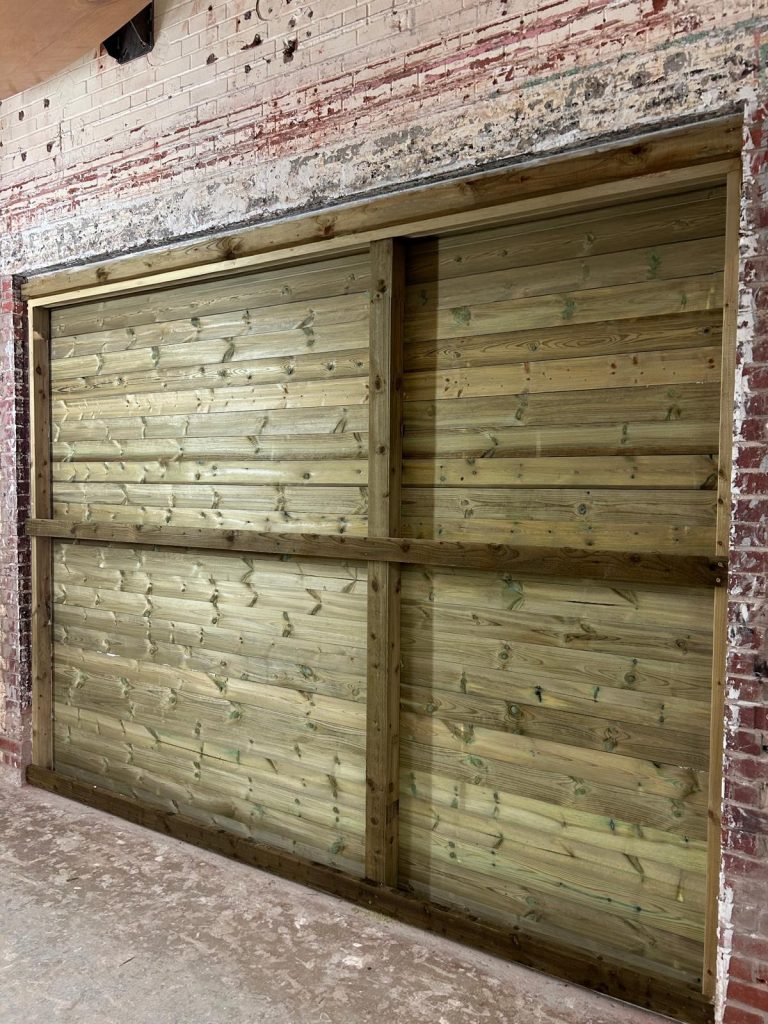
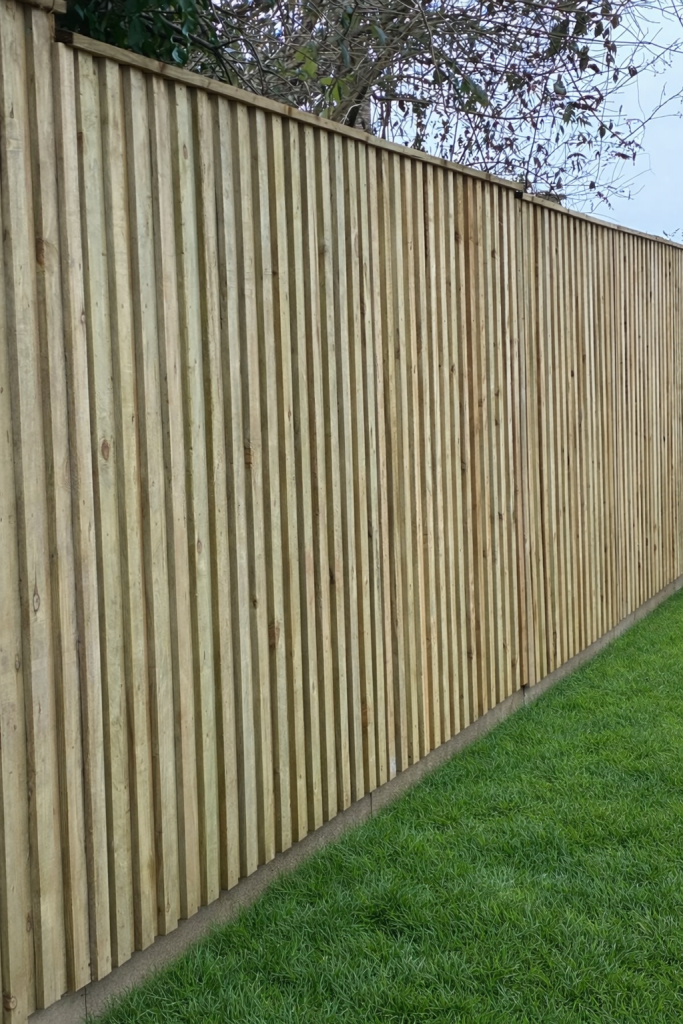
Manufactured in Silverstone, Northamptonshire, using our on-site sawmill and treatment plant
Custom cut to project requirements and supplied as kits or prefabricated panels for efficient installation
Available in green or brown treatment finishes
Quick Decision Guide: Which Acoustic Fence Should You Choose?
1. Need maximum reduction for a commercial boundary?
Specify a tested system with full sealing, correct height and properly designed gates. Request technical specifications.
2. Need to reduce residential road noise?
Choose sealed timber acoustic fencing with adequate height and a sealed base.
3. Upgrading an existing fence?
Ensure the replacement system addresses gaps, mass and structural stability.
Remember: performance is about the system — not just the panel.
Ready to Choose the Right Acoustic Fence?
If you’re comparing acoustic fencing rating dB figures, materials and standards, make sure you’re evaluating tested systems, not marketing claims.
For expert guidance, technical documentation or a project-specific quote:
- Request a quote
- Check out our calculators to get accurate measurements
- Speak to the Linnell Bros team today
Choosing the right acoustic fence panels starts with understanding performance and ends with installing a system designed to deliver measurable results.
Frequently Asked Questions
High-performance systems can deliver noise reduction of up to 26dB under test conditions. Actual performance depends on installation quality, height, positioning and the presence of gaps.
It represents the maximum reduction measured during independent testing. Real-world results vary based on site conditions and barrier design.
Look for compliance with BS EN 1793 acoustic barrier fencing and testing to BS EN ISO 10140-2:2021.
UC4 refers to timber treated for ground contact and external use. It improves durability and resistance to decay in demanding outdoor conditions.
Timber can be highly effective when designed with sufficient mass and airtight construction. Concrete offers higher mass but may be more intrusive and costly to install.
If traffic or rail noise is affecting daily comfort, a properly specified acoustic fence for railway noise or road noise can significantly improve conditions.
Pressure-treated UC4 timber systems typically offer a lifespan of 10–15 years with low maintenance.
Yes. Linnell Bros systems can be prefabricated to suit project requirements, supporting consistent quality and efficient installation.
No. Even small gaps can allow sound leakage and undermine performance.
Yes. Technical specifications are available, and you can request a tailored quote based on your project requirements.